
Screening
Genotyping + quality control + breeding values + composite index + herd ranking.
- Who it suits
- Operations doing genomic testing for the first time.
- Delivery time
- 4–6 weeks
Veterinary molecular diagnostics and genomics
Our services are structured in four layers. Depending on customer need, service can be obtained from a single layer alone, or an end-to-end package can be chosen.
01
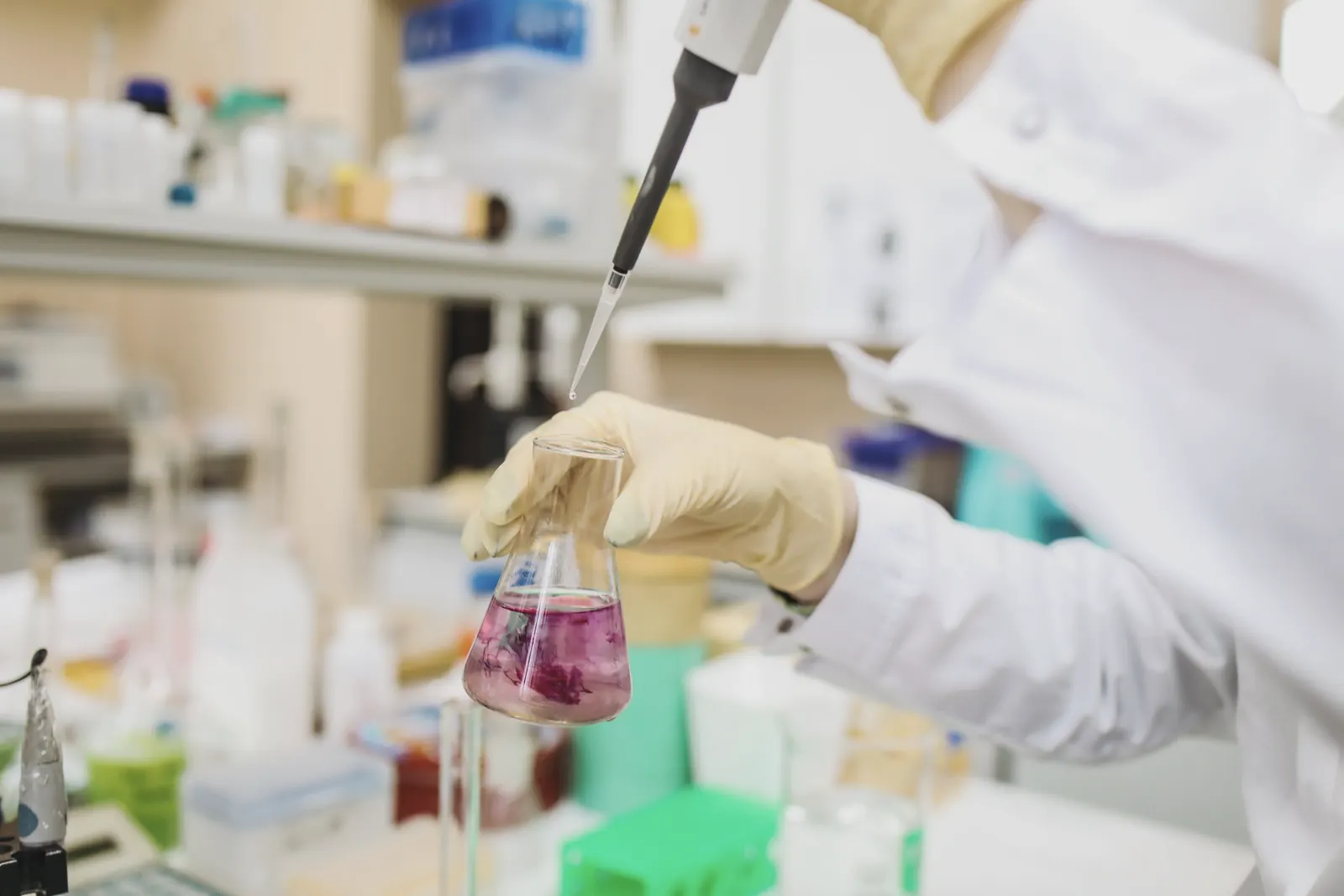
Sample plan, acceptance, sample chain tracking, DNA/RNA isolation, PCR, and SNP genotyping.
A quality-controlled, traceable raw result. Carried out through the authorized and accredited laboratories we partner with.
02
Quality control, population structure, breeding value estimation, index, defect screening, diagnostic interpretation.
A value, confidence level, and within-population position for every result.
03
Selection recommendation, mating plan, relatedness management, herd health roadmap.
An actionable decision at the animal level and the herd level. Standard report structure.
04
Multi-tenant software, API, data exchange with herd management software.
The operation's continuous management of its own data; a living system instead of a one-off report.
Bos taurus — Black and White (Holstein), Simmental, Brown Swiss, and their crossbreds
Equus caballus — racing and breeding horses
Ovis aries and Capra hircus — sheep and goats
Ruminant, equine, pet, and poultry — PCR panels and antibiotic resistance tests
Species-independent; academic, public-sector, and private-sector projects
Operation-level breeding strategy
Homo sapiens — pharmacogenomics and clinical exome
Türkiye has a cattle population of 17.5 million head, approximately 94% of which consists of improved breeds and their crosses (reference date: 31 December 2025).
In classical selection, a heifer's true production potential can only be understood once she completes her first lactation — that is, roughly three years later. Genomic testing provides this information from birth.
Result: the generation interval shortens, genetic progress accelerates, and the cost of raising the wrong heifers falls. In addition, an additional government subsidy is envisaged for calves that are genomically tested in herdbook-registered A/B-class operations (Section 16).
Packages are defined according to typical needs and can be combined. Pricing is finalized at the proposal stage based on the number of animals, panel density, and scope of service; the current price list can be requested from info@vethia.com.tr.
Genotyping + quality control + breeding values + composite index + herd ranking.
Genetic defect screening is added to the Screening package.
A mating plan, relatedness management, and a results consultation are added to the Screening + Defect package.
Breeding Program + platform access + annual progress report + periodic consultations.
PCR panels and antibiotic resistance tests; single or periodic monitoring.
Multi-operation platform account, batch analysis, association-level reporting, member training.
GWAS, genomic prediction, panel design, pipeline development, publication-ready output.
PGx and/or clinical exome interpretation infrastructure, setup, and training.
| Segment | Need | Solution |
|---|---|---|
| Dairy cattle operations | Deciding correctly which heifer stays in the breeding herd; lowering the cost of raising the wrong heifers; monitoring herd health. | Genomic testing + index ranking + heifer selection plan + diagnostic panels + platform access. |
| Breeding-stock producers | Creating a price difference in the market with a certified breeding value. | An individual breeding profile report, defect screening, and a document set usable in sales. |
| Breeder associations | Setting up a collective genomic program for their members; building a reference population. | A multi-operation platform account, batch analysis, association-level reporting, and member training. |
| Beef (fattening) operations | Early differentiation in growth and carcass traits; rapid detection of respiratory diseases. | Genomic screening with the relevant trait set and ruminant diagnostic panels. |
| Horse breeders and stud farms | Relatedness control, mating planning, and infectious disease screening. | Population structure analysis, genomic relatedness, defect screening, and equine diagnostic panels. |
| Small-ruminant operations and associations | An objective criterion for selecting rams and bucks; native-breed characterization. | A two-phase program: population characterization, followed by a prediction model. |
| Veterinary clinics and animal hospitals | Fast, reliable agent detection; evidence for antibiotic selection. | Pet and ruminant PCR panels, antibiotic resistance tests, and a structured report. |
| Poultry operations | Flock health monitoring and early warning. | Poultry diagnostic panels and a periodic monitoring program. |
| Research institutions | A competent partner to carry out the project analysis work package. | GWAS, genomic prediction, panel design, pipeline development, and publication-ready output. |
| Clinical laboratories | Reliable, auditable infrastructure for PGx and clinical exome interpretation. | Clinical genomic platform, a versioned analysis pipeline, and a standard report. |
The process from sample to decision is seven steps. Durations are for the standard workflow and are confirmed per project at the proposal stage.
01
The operation's breeding goal, herd structure, existing record infrastructure, and budget framework are assessed. Free of charge.
1 day
02
Which animals will be sampled, by which method, and in what order is planned. The kit and protocol are sent.
2–3 days
03
Samples are collected, barcoded, and delivered to the laboratory. Acceptance criteria are checked.
Depends on the operation
04
DNA isolation and SNP genotyping. A call file is produced.
2–4 weeks
05
Quality control at the individual and marker level, breeding value estimation, index calculation, defect screening.
3–5 business days
06
Production of the eight-section report at the animal level and the herd level; upload to the platform.
2–3 business days
07
Joint review of the report, finalization of selection and mating decisions, and an implementation plan.
1 day
The nine statements below are the public disclosure of our methodology. Our goal is for the customer and the auditor to be able to evaluate the result independently.
Genotyping and PCR analyses are carried out through partnerships established with authorized and accredited laboratories. This is a deliberate structural choice: laboratory competence and analysis-and-interpretation competence are different disciplines; we chose to be the best at the interpretation layer.
| Component | Description |
|---|---|
| Partnership model | A written partnership protocol with laboratories that are authorized by the Ministry and/or accredited. The current partnership list and their scopes of authorization are provided in the proposal file. |
| Genotyping technology | SNP microarray-based genotyping. Sequencing-based approaches can also be applied depending on project needs. |
| Panel densities | 20K, 50K, and 100K options. The density is selected jointly based on the targeted accuracy and budget. |
| Molecular diagnostics | Real-time PCR-based agent detection and resistance gene analysis. |
| Advanced analyses | Whole-genome sequencing (WGS), targeted sequencing, and gene expression (RNA-Seq) studies are offered on a project basis. |
The process begins with a non-binding needs consultation. In this meeting, we discuss your herd's current status, your goals, and your budget framework; together we determine the package that suits you.